LOLA Team: Difference between revisions
| (3 intermediate revisions by 2 users not shown) | |||
| Line 2: | Line 2: | ||
= Germany - Nürtingen-Geislingen University (NGU) = | = Germany - Nürtingen-Geislingen University (NGU) = | ||
*[https://www.hfwu.de university website], project coordination and grant holder | *[https://www.hfwu.de university website], project coordination and grant holder | ||
<gallery caption=" " widths="300px" heights="200px" perrow="4"> | <gallery caption="" widths="300px" heights="200px" perrow="4"> | ||
File:Ellen Fetzer.jpg|'''Dr. Ellen Fetzer, Project Coordinator:''' Ellen Fetzer holds a doctoral degree in landscape architecture from Kassel University, Germany. The focus of her work at Nürtingen-Geislingen University is on computer-supported collaborative learning and education for sustainable development in various contexts and settings. She is course director of the international Master programme in landscape architecture. She is immediate past-president of ECLAS, the European Council of Landscape Architecture Schools. Ellen leads the TELOS ERASMUS project. '''Motivation for LOLA project:''' Enhancing systems thinking, critical thinking and creative imagination for turning conflicts into opportunities | File:Ellen Fetzer.jpg|'''Dr. Ellen Fetzer, Project Coordinator:''' Ellen Fetzer holds a doctoral degree in landscape architecture from Kassel University, Germany. The focus of her work at Nürtingen-Geislingen University is on computer-supported collaborative learning and education for sustainable development in various contexts and settings. She is course director of the international Master programme in landscape architecture. She is immediate past-president of ECLAS, the European Council of Landscape Architecture Schools. Ellen leads the TELOS ERASMUS project. '''Motivation for LOLA project:''' Enhancing systems thinking, critical thinking and creative imagination for turning conflicts into opportunities | ||
File:Dirk_Funck.jpg|'''Prof. Dr. Dirk Funck, Team Member''': Prof. Dr. Dirk Funck is a lecturer for Multichannel-Retailing, Sales, Social Innovation and Methodical Basics at Nürtingen-Geislingen University. His interests in research and transfer lie in the topics of "Medium-Sized Retail", "Sustainable Community Development" and "Social Innovation". He is leading the DAAD-funded project “Middle East Productive Landscapes” (MeProLand). After his studies, doctorate, and research activities at the University of Göttingen, Dirk spent eight years in leading positions in medium-sized retail cooperation. In 2011, he was appointed professor at the University in Worms. In 2014, he moved to Nürtingen-Geislingen University. Dirk was elected Chairman of the Advisory Board of the Rid Foundation for Medium-Sized Bavarian Retailers in 2011. He also works for the foundation as a trainer and coach. '''Motivation for TELOS project:''' Teaching means touching someone's life. | File:Dirk_Funck.jpg|'''Prof. Dr. Dirk Funck, Team Member''': Prof. Dr. Dirk Funck is a lecturer for Multichannel-Retailing, Sales, Social Innovation and Methodical Basics at Nürtingen-Geislingen University. His interests in research and transfer lie in the topics of "Medium-Sized Retail", "Sustainable Community Development" and "Social Innovation". He is leading the DAAD-funded project “Middle East Productive Landscapes” (MeProLand). After his studies, doctorate, and research activities at the University of Göttingen, Dirk spent eight years in leading positions in medium-sized retail cooperation. In 2011, he was appointed professor at the University in Worms. In 2014, he moved to Nürtingen-Geislingen University. Dirk was elected Chairman of the Advisory Board of the Rid Foundation for Medium-Sized Bavarian Retailers in 2011. He also works for the foundation as a trainer and coach. '''Motivation for TELOS project:''' Teaching means touching someone's life. | ||
| Line 13: | Line 13: | ||
*[https://www.ulb.be/ university website], Project partner | *[https://www.ulb.be/ university website], Project partner | ||
[[File:Didier_Vancutsem.jpg|thump|200 px|left]] | [[File:Didier_Vancutsem.jpg|thump|200 px|left]] | ||
<small> | |||
<small>'''Didier Vancutsem, Team coordinator''': Didier Vancutsem holds bachelor and master’s degrees in landscape architecture, city and regional planning and regional management. He is Assoc. Prof. at the ULB Free University of Brussels – Faculty of Architecture La Cambre Horta since 2009, involved in Landscape Architecture and Urban Planning Master programs as well as research. As director of the planning office “urban scape” Munich since 1992, Didier has gained professional experience worldwide in urban innovation, landscape management, elaboration of national and regional strategies for integrated urban development in Europe and Middle East, Africa, Russia, Asia. He is active as registered expert for the European Commission and URBACT, UN-Habitat and involved in European and international research projects. He was IFLA Europe delegate for Belgium (1994-1998) (2013-2021), and Vice-President Professional Practice of the International Federation of Landscape Architects Europe (2021 - 2025). He is currently Executive Director of the Institute for Urban Excellence iUE. He co-funded last year the new International Urban Professionals Forum (IUPF), Paris.</small> | |||
<small>'''Motivation for LoLa project:''' Every human activity interacts with the landscape and aims at concrete results. Consequently, every human intervention is motivated by achieving economic results in transforming everyday's landscape. Didier is very happy to be able to contribute to the outcomes of LoLa, as this project will demonstrate this interaction and how added-values, trends and impacts become tangible in humanity’s landscape.</small> | |||
=Poland: Gdańsk University of Technology = | =Poland: Gdańsk University of Technology = | ||
| Line 49: | Line 59: | ||
File:Marco Delli Paoli.jpg|'''Marco Delli Paoli, Team Member''': Architect, PhD in Environmental Technology Design. He is currently a postdoctoral researcher at Sapienza University of Rome (Italy), where he is carrying out research activities on Positive Energy Districts (PEDs) and climate-adaptive design strategies, combining them through a holistic approach to cope with the energy transition scenario. Expert in the field of Technology of Architecture from 2023 and member of the Italian Society of Technology of Architecture (SITdA). He is an active member of Working Group 4 of the COST Action “Positive Energy Districts European Network”, for which he holds the role of Grant Holder Manager. Additionally, he is involved in many international research groups, collaborating with researchers and professionals, including IEA Annex83, with the objective of elucidating the interrelated challenges associated with the PED model in urban areas. | File:Marco Delli Paoli.jpg|'''Marco Delli Paoli, Team Member''': Architect, PhD in Environmental Technology Design. He is currently a postdoctoral researcher at Sapienza University of Rome (Italy), where he is carrying out research activities on Positive Energy Districts (PEDs) and climate-adaptive design strategies, combining them through a holistic approach to cope with the energy transition scenario. Expert in the field of Technology of Architecture from 2023 and member of the Italian Society of Technology of Architecture (SITdA). He is an active member of Working Group 4 of the COST Action “Positive Energy Districts European Network”, for which he holds the role of Grant Holder Manager. Additionally, he is involved in many international research groups, collaborating with researchers and professionals, including IEA Annex83, with the objective of elucidating the interrelated challenges associated with the PED model in urban areas. | ||
'''Motivation for TELOS project: ''' By participating in the TELOS Project, Marco contributes to the implementation of strategies and solutions that address contemporary challenges towards climate-resilient cities. This is achieved by addressing decarbonisation as an opportunity for a paradigm shift in urban space design, which is offered by the energy transition. | '''Motivation for TELOS project: ''' By participating in the TELOS Project, Marco contributes to the implementation of strategies and solutions that address contemporary challenges towards climate-resilient cities. This is achieved by addressing decarbonisation as an opportunity for a paradigm shift in urban space design, which is offered by the energy transition. | ||
</gallery> | |||
=Spain: Technical University of Valencia= | |||
*[https://www.upv.es/index-en.html website], Project partner | |||
<gallery caption="" widths="200px" heights="200px" perrow="4"> | |||
File:Juan_Jose_Galan_Vivas.jpg|'''Juan Jose Galan Vivas, Team Member''': Juanjo Galan-Vivas is an Associate Professor in the Urban Planning Department of the Polytechnic University of Valencia (Spain). From 2015 to 2020, he served in a similar position at Aalto University (Finland). His teaching and research focus on landscape planning, landscape design, sustainable development, regional and urban planning, and, on a more general level, on the intersections between social and ecological systems. He coordinated the Sierra Calderona Strategic Plan (2013-2014) and the AELCLIC project for the Adaptation of European Landscapes to Climate Change (2018-2020). From 2017 to 2020 he was the promoter and chair of the Landscape Observatory of Finland. '''Motivation for TELOS project:''' The configuration and evolution of the landscape are highly influenced by economic processes framing the interactions between people and the environment. The TELOS project gives an opportunity, in landscape architecture education, to align those processes with the generation of more sustainable, inclusive, resilient, and democratic landscapes. | |||
</gallery> | |||
=Lebanon: American University of Beirut= | |||
*[https://www.aub.edu.lb website], Project partner | |||
<gallery caption="" widths="200px" heights="200px" perrow="4"> | |||
File:BeataDreksler.jpg|'''Beata Dreksler, Team Member''': Beata Dreksler is an Assistant Professor of Landscape Architecture at the American University of Beirut. She holds a Ph.D. in landscape architecture from Warsaw University of Life Sciences—SGGW, Poland, and has over 30 years of experience across Europe, Central America, and the Middle East. Beata has contributed to projects ranging from urban revitalization to community-focused green spaces. Her current research explores landscape democracy and digital transformation, including Virtual Reality applications in design. '''Motivation for TELOS project:''' Participating in the TELOS project is an exciting opportunity to address the critical intersection of landscape and economy, a perspective increasingly vital in our field. This project offered a unique platform for contributing to the development of landscape architecture education, redefining the profession, and integrating economic frameworks into landscape architecture for long-term community benefits. | |||
</gallery> | </gallery> | ||
=The Netherlands: LE:NOTRE Institute= | =The Netherlands: LE:NOTRE Institute= | ||
*[http://www.le-notre.org | *[http://www.le-notre.org website], Project partner | ||
<gallery caption="" widths="200px" heights="200px" perrow="4"> | <gallery caption="" widths="200px" heights="200px" perrow="4"> | ||
File:Jeroen_de_Vries.jpg|'''Jeroen de Vries, Team Coordinator''': Jeroen de Vries, landscape architect, is a researcher at the LE:NOTRE Institute. His research focuses on food governance, the design of foodscapes in metropolitan areas, the productivity of different typologies of UA, and strategies to integrate these in the spatial design of urban and peri-urban areas. Jeroen combines work as a professional practitioner, lecturer, and researcher. He coordinated the theme of foodscapes in the LE:NOTRE Landscape Forums in Rome, Zagreb, Bratislava, and Rimini. Jeroen is active in a number of European educational and research projects that foster the quality in landscape education, research and practice. His mission is to support the academic community and the profession of landscape architecture on a European level. '''Motivation for TELOS project:''' The TELOS project offers a unique possibility to contribute to an often neglected aspect of landscape planning. Jeroen is motivated to include various dimensions of economy to develop landscapes with the lens of a common good - the landscape belongs to all. | File:Jeroen_de_Vries.jpg|'''Jeroen de Vries, Team Coordinator''': Jeroen de Vries, landscape architect, is a researcher at the LE:NOTRE Institute. His research focuses on food governance, the design of foodscapes in metropolitan areas, the productivity of different typologies of UA, and strategies to integrate these in the spatial design of urban and peri-urban areas. Jeroen combines work as a professional practitioner, lecturer, and researcher. He coordinated the theme of foodscapes in the LE:NOTRE Landscape Forums in Rome, Zagreb, Bratislava, and Rimini. Jeroen is active in a number of European educational and research projects that foster the quality in landscape education, research and practice. His mission is to support the academic community and the profession of landscape architecture on a European level. '''Motivation for TELOS project:''' The TELOS project offers a unique possibility to contribute to an often neglected aspect of landscape planning. Jeroen is motivated to include various dimensions of economy to develop landscapes with the lens of a common good - the landscape belongs to all. | ||
</gallery> | </gallery> | ||
Latest revision as of 17:12, 31 May 2026
Germany - Nürtingen-Geislingen University (NGU)
- university website, project coordination and grant holder
-
 Dr. Ellen Fetzer, Project Coordinator: Ellen Fetzer holds a doctoral degree in landscape architecture from Kassel University, Germany. The focus of her work at Nürtingen-Geislingen University is on computer-supported collaborative learning and education for sustainable development in various contexts and settings. She is course director of the international Master programme in landscape architecture. She is immediate past-president of ECLAS, the European Council of Landscape Architecture Schools. Ellen leads the TELOS ERASMUS project. Motivation for LOLA project: Enhancing systems thinking, critical thinking and creative imagination for turning conflicts into opportunities
 -
 Prof. Dr. Dirk Funck, Team Member: Prof. Dr. Dirk Funck is a lecturer for Multichannel-Retailing, Sales, Social Innovation and Methodical Basics at Nürtingen-Geislingen University. His interests in research and transfer lie in the topics of "Medium-Sized Retail", "Sustainable Community Development" and "Social Innovation". He is leading the DAAD-funded project “Middle East Productive Landscapes” (MeProLand). After his studies, doctorate, and research activities at the University of Göttingen, Dirk spent eight years in leading positions in medium-sized retail cooperation. In 2011, he was appointed professor at the University in Worms. In 2014, he moved to Nürtingen-Geislingen University. Dirk was elected Chairman of the Advisory Board of the Rid Foundation for Medium-Sized Bavarian Retailers in 2011. He also works for the foundation as a trainer and coach. Motivation for TELOS project: Teaching means touching someone's life.
 -
 Shashank Yadav is an architect from India, currently pursuing a Master’s degree in Landscape Architecture at NGU. His academic focus centers on foodscapes, regional food chains, sustainable landscape development, and promoting sustainable education for all. He actively collaborates with various organizations dedicated to advancing the future of regional and sustainable food systems. He has participated in multiple TELOS Workshops, where he has worked closely with the thematic group on Foodscapes, contributing valuable insights and innovative solutions. His motivation for TELOS is driven by the rich diversity and interdisciplinary nature of landscape education. The TELOS programme enriches this experience by integrating an economic perspective into various landscape themes, all while maintaining a strong emphasis on sustainable development.


Belgium: Université Libre de Bruxelles Faculty of Architecture La Cambre Horta
- university website, Project partner

Didier Vancutsem, Team coordinator: Didier Vancutsem holds bachelor and master’s degrees in landscape architecture, city and regional planning and regional management. He is Assoc. Prof. at the ULB Free University of Brussels – Faculty of Architecture La Cambre Horta since 2009, involved in Landscape Architecture and Urban Planning Master programs as well as research. As director of the planning office “urban scape” Munich since 1992, Didier has gained professional experience worldwide in urban innovation, landscape management, elaboration of national and regional strategies for integrated urban development in Europe and Middle East, Africa, Russia, Asia. He is active as registered expert for the European Commission and URBACT, UN-Habitat and involved in European and international research projects. He was IFLA Europe delegate for Belgium (1994-1998) (2013-2021), and Vice-President Professional Practice of the International Federation of Landscape Architects Europe (2021 - 2025). He is currently Executive Director of the Institute for Urban Excellence iUE. He co-funded last year the new International Urban Professionals Forum (IUPF), Paris.
Motivation for LoLa project: Every human activity interacts with the landscape and aims at concrete results. Consequently, every human intervention is motivated by achieving economic results in transforming everyday's landscape. Didier is very happy to be able to contribute to the outcomes of LoLa, as this project will demonstrate this interaction and how added-values, trends and impacts become tangible in humanity’s landscape.
Poland: Gdańsk University of Technology
- university website, Project partner
-
 Karolina Krosnicka, Team Coordinator: Karolina A. Krośnicka, (Ph.D., D.Sc., Eng., Arch.) is a professor at the Department of Urban Design and Regional Planning, Faculty of Architecture, Gdańsk University of Technology (Poland). Karolina’s research interests focus on port-city spatial relations, Integrated Coastal Zone Management, theory of urban dynamics, and evolution of landscapes. While she was employed at the Faculty of Navigation at Gdynia Maritime University (Poland) she concentrated on seaport and terminal planning. She collaborates with local authorities and companies and has rich educational experience. She is a member of the Society of Polish Town Planners, the International Society of City and Regional Planners, and the World Institute for Engineering and Technology Education. Motivation for TELOS project : Within the last 30 years, along with the socio-economic transformation, some of the cultural landscapes disappeared, and some new emerged. However, not all of these changes were heading towards the sustainable transition of ecosystems. TELOS project and in-depth understanding of landscape transformation costs could enable the planning of urban developments in a holistic and resilient way.
 -
 Dorota Jankowska, Team Member: Dorota Wojtowicz-Jankowska is a Professor at the Faculty of Architecture of the Gdańsk University of Technology. She is employed at the Department of Environmental Design. She is a promoter of many diplomas on bachelor's and master's levels. In her research work, she is concerned about the problems related to exposition spaces and shaping the city’s landscape. Among her research interests are problems of creating cultural spaces such as museums, galleries, and urban areas used for various forms of presentation. She popularizes scientific experience in cooperation with local governments and public institutions. Motivation for TELOS project : Dorota was motivated to be part of the TELOS project by my curiosity of understanding the landscape through different scientific disciplines and their representatives. Being a part of TELOS team helped to build her knowledge, and consciousness of the complex concept of the landscape.
 -
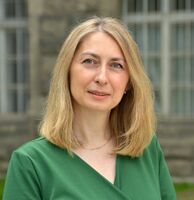 Magdalena Rembeza, Team Member: Magdalena Rembeza is a tenured Assistant Professor at Gdańsk University of Technology, Poland, where she completed her doctorate. She is also a member of the Board of the Revitalization Forum Association. She gained her professional experience in Poland, England, Germany and the United States. She is also a scholarship holder of the Kosciuszko Foundation in 2014. In years 2014-15, she has completed the SPURS Program at the Massachusetts Institute of Technology (MIT), USA. Her research interests and practice focus on widely understood revitalization of contemporary cities and its public space, also with the use of art and culture.
 -
 Katarzyna Zielonko-Jung, Team Member: Katarzyna Zielonko-Jung – an architect, academic lecturer, scientist, professor at Gdańsk University of Technology at the Department of Environmental Design. She has co-created the program for postgraduate studies in Ecological Architecture and Construction and is a lecturer there. She has authored numerous Polish and foreign publications related to ecological architecture issues, in particular their relationship with microclimatic phenomena in the urban environment. She participated in research projects focused on sustainable architecture and improving the quality of city climate. She is a member of Gdańsk Architecture Council, UN Global Poland Climate Council, Mazovian District Chamber of Architects, and Association of Polish Architects. Motivation for TELOS project : Katarzyna is motivated to be part of the TELOS because it is a great opportunity to combine her experience and competencies with the knowledge of specialists from other disciplines. This will allow her to better understand the phenomenon of landscape and participate in discussions about its economic value.
 -
 Gabriela Rembarz, Team Member: Gabriela Rembarz PhD, is adjunct at the Gdansk University of Technology, Poland. She studied architecture, urban planning and environmental protection in Gdansk (GUT), Warsaw (WUT) and at the University Stuttgart (as a DAAD-scholar). She is also MIT_DUSP_SPURS Fellow 2012, recently cooperating with the Fulbright Poland. She is a member of the Society of Polish Town Planners (TUP) and the German Academy for Urban Development and Regional Planning (DASL). Gabriela explores landscape urbanism, combining an academic approach with her practical planning experience, related to the large-scale urban street-network development. Such understanding of the contemporary planning challenges characterizes also her original programs of design studios, offered both to the Polish and international students at the GUT. Motivation for TELOS project : The need to complete interdisciplinary knowledge in field of urban landscape architecture and planning and interest in other teaching methods concerning no-technical issues in urban landscape planning are what motivate Gabriela to be part of TELOS project.


Turkey: Akdeniz University
- university website, Project partner
-
 Veli Ortacesme, Team Coordinator: Veli Ortacesme has been trained as a landscape architect. His specialty and research interests include landscape planning, protected areas and urban green spaces. After having worked in private sector for two years, he moved to academia where he has been studying for more than 30 years. Currently, he has been teaching and conducting research at Akdeniz University, Faculty of Architecture, Department of Landscape Architecture in Antalya, Turkey. Veli has 35 years of experience in professional practice, education and research and published more than 200 articles, conference papers, research reports, book chapters and books. Motivation for TELOS project : The economic aspect of landscape receives little consideration in research as well as in the programs and actions. The TELOS Project deals with this issue in urban environments. What makes Veli more excited is the fact that the project aims to empower new generation of visionary professionals and decision-makers to address sustainability challenges.
 -
 Meryem Atik, Team Member: Meryem Atik is a full-time lecturer and researcher at the Department of Landscape Architecture, Faculty of Architecture, University of Akdeniz, Antalya Turkey. Her works focuses on the natural and cultural aspects of the landscape on special topics of cultural landscapes, landscape character analysis, rural landscapes, as well as landscape conservation, native plants, tourism and environment relations, planting design. She is the co-author of 10 English book chapters and recently the editor of Akdeniz University Journal of the Faculty of Architecture. Motivation for TELOS project : Human effort to benefit from nature is motivated by an economic purpose and resulted multiple relationship between culture and landscape. What motivates Meryem to be part of the TELOS project is to understand the intact relation between economy and landscape and to learn how such relation can be transferred in “sustainable” models.
 -
 Elif Palak Bektas, Team assistant: Elif graduated from the Department of Urban Design and Landscape Architecture in 2017. After her master degree with a focus on landscape planning, she continues her education as a PhD student at Akdeniz University, Department of Landscape Architecture. Currently, she has been working as a Research Assistant since 2019. Her research interests include ecological landscape planning, urban blue and green infrastructure and urban design. Motivation for the TELOS project: The TELOS Project has been a very detailed and clear demonstration of the complex relationships in the landscape with different disciplines. What makes Elif more excited is the potential of this multi-layered structure that connects many disciplines, strengthening the inter-sectoral dialogue and broadening the perspective of each field of expertise.
 -
 Ibrahim Yilmaz, Team Member: Ibrahim Yilmaz is specialized in agricultural economics. His specialty and research interests include farm management and farm economics, agricultural cooperatives, rural development and agricultural marketing. After graduations he started to academia where he has been studying for more than 35 years. Currently, he has been teaching and conducting research at Akdeniz University, Faculty of Agriculture, Department of Agricultural Economics in Antalya, Turkey. Ibrahim has 37 years of experience in professional practice, education and research and published more than 150 articles, conference papers, research reports and book chapters. Motivation for TELOS project : As agricultural economists, Ibrahim works towards solving the problems encountered in agriculture by combining agricultural and economic sciences. With a similar approach, the TELOS Project is also concerned with the economic aspect of landscape in urban environments. What motivates Ibrahim is that the project allows him to apply his experience in a new field and aims to empower the next generation of decision makers to address sustainability challenges.
 -
 Emrah Yildirim, supporting faculty: Emrah is a landscape architect. He started to work as a Research Assistant at Akdeniz University, Faculty of Architecture Department of Landscape Architecture in 2000. He is still working as a Doctoral Lecturer in the same department. His specialty and research interests include landscape planning, landscape ecology and Geographic Information Systems in landscape architecture. Motivation for the TELOS project: The impact of landscape economy on the structure of the landscape is worth investigating. In addition, considering economic activities and the system cycle together in landscape planning will bring new solutions.


Italy: La Sapienza University Rome
- university website, Project partner
-
 Maria Beatrice Andreucci, Team Coordinator: Architect, landscape architect and economist. She holds a Ph.D. Doctor Europaeus in Environmental Design and works as Research Professor at the Department of Planning, Design, Technology of Architecture, “Sapienza” University of Rome. She has published more than 100 scientific products, including 5 books, and has delivered more than 80 oral presentations and keynotes in international conferences and workshops. She is leading several Eu funded projects, and her work continues to engage environmental technological design, landscape ecology, and economic valuation as an evolving integrated framework, linking nature-based solutions’ performance assessment, economic valuation of ecosystem services, climate mitigation, and urban resilience capacity building. Motivation for TELOS project: Through active participation in TELOS, Maria expects to contribute – leveraging her background and experiences in the field of the Landscape Economy – to the dissemination, at an international level, of the relevance of the multiple social and economic benefits provided by nature-based solutions towards climate neutral, resilient, healthy, inclusive, and equitable neighborhoods and cities.
 -
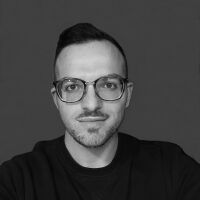 Marco Delli Paoli, Team Member: Architect, PhD in Environmental Technology Design. He is currently a postdoctoral researcher at Sapienza University of Rome (Italy), where he is carrying out research activities on Positive Energy Districts (PEDs) and climate-adaptive design strategies, combining them through a holistic approach to cope with the energy transition scenario. Expert in the field of Technology of Architecture from 2023 and member of the Italian Society of Technology of Architecture (SITdA). He is an active member of Working Group 4 of the COST Action “Positive Energy Districts European Network”, for which he holds the role of Grant Holder Manager. Additionally, he is involved in many international research groups, collaborating with researchers and professionals, including IEA Annex83, with the objective of elucidating the interrelated challenges associated with the PED model in urban areas.


Spain: Technical University of Valencia
- website, Project partner
-
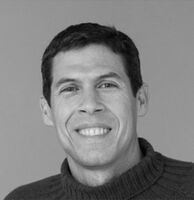 Juan Jose Galan Vivas, Team Member: Juanjo Galan-Vivas is an Associate Professor in the Urban Planning Department of the Polytechnic University of Valencia (Spain). From 2015 to 2020, he served in a similar position at Aalto University (Finland). His teaching and research focus on landscape planning, landscape design, sustainable development, regional and urban planning, and, on a more general level, on the intersections between social and ecological systems. He coordinated the Sierra Calderona Strategic Plan (2013-2014) and the AELCLIC project for the Adaptation of European Landscapes to Climate Change (2018-2020). From 2017 to 2020 he was the promoter and chair of the Landscape Observatory of Finland. Motivation for TELOS project: The configuration and evolution of the landscape are highly influenced by economic processes framing the interactions between people and the environment. The TELOS project gives an opportunity, in landscape architecture education, to align those processes with the generation of more sustainable, inclusive, resilient, and democratic landscapes.

Lebanon: American University of Beirut
- website, Project partner
-
 Beata Dreksler, Team Member: Beata Dreksler is an Assistant Professor of Landscape Architecture at the American University of Beirut. She holds a Ph.D. in landscape architecture from Warsaw University of Life Sciences—SGGW, Poland, and has over 30 years of experience across Europe, Central America, and the Middle East. Beata has contributed to projects ranging from urban revitalization to community-focused green spaces. Her current research explores landscape democracy and digital transformation, including Virtual Reality applications in design. Motivation for TELOS project: Participating in the TELOS project is an exciting opportunity to address the critical intersection of landscape and economy, a perspective increasingly vital in our field. This project offered a unique platform for contributing to the development of landscape architecture education, redefining the profession, and integrating economic frameworks into landscape architecture for long-term community benefits.

The Netherlands: LE:NOTRE Institute
- website, Project partner
-
 Jeroen de Vries, Team Coordinator: Jeroen de Vries, landscape architect, is a researcher at the LE:NOTRE Institute. His research focuses on food governance, the design of foodscapes in metropolitan areas, the productivity of different typologies of UA, and strategies to integrate these in the spatial design of urban and peri-urban areas. Jeroen combines work as a professional practitioner, lecturer, and researcher. He coordinated the theme of foodscapes in the LE:NOTRE Landscape Forums in Rome, Zagreb, Bratislava, and Rimini. Jeroen is active in a number of European educational and research projects that foster the quality in landscape education, research and practice. His mission is to support the academic community and the profession of landscape architecture on a European level. Motivation for TELOS project: The TELOS project offers a unique possibility to contribute to an often neglected aspect of landscape planning. Jeroen is motivated to include various dimensions of economy to develop landscapes with the lens of a common good - the landscape belongs to all.
