LOLA Team: Difference between revisions
| (2 intermediate revisions by one other user not shown) | |||
| Line 4: | Line 4: | ||
<gallery widths="300px" heights="200px" perrow="4"> | <gallery widths="300px" heights="200px" perrow="4"> | ||
File:Ellen Fetzer.jpg|'''Dr. Ellen Fetzer, Project Coordinator:''' Ellen Fetzer holds a doctoral degree in landscape architecture from Kassel University, Germany. The focus of her work at Nürtingen-Geislingen University is on computer-supported collaborative learning and education for sustainable development in various contexts and settings. She is course director of the international Master programme in landscape architecture. She is immediate past-president of ECLAS, the European Council of Landscape Architecture Schools. Ellen leads the TELOS ERASMUS project. '''Motivation for LOLA project:''' Enhancing systems thinking, critical thinking and creative imagination for turning conflicts into opportunities | File:Ellen Fetzer.jpg|'''Dr. Ellen Fetzer, Project Coordinator:''' Ellen Fetzer holds a doctoral degree in landscape architecture from Kassel University, Germany. The focus of her work at Nürtingen-Geislingen University is on computer-supported collaborative learning and education for sustainable development in various contexts and settings. She is course director of the international Master programme in landscape architecture. She is immediate past-president of ECLAS, the European Council of Landscape Architecture Schools. Ellen leads the TELOS ERASMUS project. '''Motivation for LOLA project:''' Enhancing systems thinking, critical thinking and creative imagination for turning conflicts into opportunities | ||
File:Dirk_Funck.jpg|'''Prof. Dr. Dirk Funck, | File:Dirk_Funck.jpg|'''Prof. Dr. Dirk Funck, team member''': Prof. Dr. Dirk Funck (Team Member) is Professor of Business Administration at Nürtingen-Geislingen University (HfWU), Germany. His work focuses on social entrepreneurship, academic skills, and increasingly on connecting academic learning with social innovation and real-world transformation. He develops community-based and living-lab projects bringing together higher education, civil society and local actors and has extensive experience in international and interdisciplinary cooperation. Beyond academia, he serves on the board of Welthaus Nürtingen, promoting fair consumption, social encounter and sustainable development, and on the supervisory board of MutMacherMenschen eG, a social enterprise fostering inclusion and participation in the labour market. Motivation for LOLA project: Learning across disciplines and cultures, understanding complex systems, and turning academic knowledge into community-led action for sustainable transformation. | ||
File:Shashank.jpg|'''Shashank Yadav''' is an architect | File:Shashank.jpg|'''Shashank Yadav, team member'''': Shashank is a researcher at HfWU Nürtingen Geislingen. He is an architect, and also holds a Master’s degree in Landscape Architecture from HfWU Nürtingen-Geislingen. His academic focus centers on nature conservation and reconnection, foodscapes, regional food chains, sustainable landscape development, and promoting sustainable education for all. He actively collaborates with various organizations dedicated to advancing the future of regional and sustainable food systems. Over the years he has been part of TELOS,and multiple other ERASMUS+ seminars, working closely with the thematic group foodscapes, contributing valuable insights and innovative solutions. | ||
</gallery> | </gallery> | ||
| Line 67: | Line 67: | ||
File:Ignacio.png|'''Ignacio Díez ''': Ignacio Díez is an Agricultural Engineer, holds a degree in Environmental Sciences, and has a Master’s degree in Landscape Architecture. He earned his PhD from the Universitat Politècnica de València in 2015. He founded the Valencian landscape architecture studio cercle (www.cercle.es). He is Associate Professor in the Department of Urban Planning at the Universitat Politècnica de València and promotes the outreach platform paisatge.org. His work focuses on landscape planning and design, with particular attention to public participation processes. In 2025, he received the award for Best Green Infrastructure Project in Spain for the landscape intervention in the Cabanyal neighbourhood (Valencia), granted by the Spanish Association of Public Parks and Garden. '''Motivation for LoLa''': Ignacio’s motivation for participating in LOLA project lies in applying systemic thinking and a participatory approach to landscape characterization and to green infrastructure design within the framework of landscape planning tools. | File:Ignacio.png|'''Ignacio Díez ''': Ignacio Díez is an Agricultural Engineer, holds a degree in Environmental Sciences, and has a Master’s degree in Landscape Architecture. He earned his PhD from the Universitat Politècnica de València in 2015. He founded the Valencian landscape architecture studio cercle (www.cercle.es). He is Associate Professor in the Department of Urban Planning at the Universitat Politècnica de València and promotes the outreach platform paisatge.org. His work focuses on landscape planning and design, with particular attention to public participation processes. In 2025, he received the award for Best Green Infrastructure Project in Spain for the landscape intervention in the Cabanyal neighbourhood (Valencia), granted by the Spanish Association of Public Parks and Garden. '''Motivation for LoLa''': Ignacio’s motivation for participating in LOLA project lies in applying systemic thinking and a participatory approach to landscape characterization and to green infrastructure design within the framework of landscape planning tools. | ||
File:Elisabet.png|'''Elisabet Quintana Seguí''': Elisabet Quintana Seguí holds a PhD in Architecture from the Universitat Politècnica de València, where she is Assistant Professor of Urban Planning and Landscape. She also holds a Diploma in Landscape Architecture and is a member of the Spanish Association of Landscape Architects. With over twenty years of professional experience, she is specialised in public space and landscape design. She is co-author of the Landscape Programme of Gandia, linked to the Coastal Territorial Action Plan of the Valencian Community, and of the Master Plan for the Beniopa Ravine. She has developed public and private projects independently and within multidisciplinary teams. Motivation for LoLa: Elisabet´s motivation to participate in HORTALAB‑LOLA is to deepen my understanding of systems thinking and apply it, from a landscape architecture perspective, to the analysis and regeneration of vulnerable territories, linking teaching, applied research, and project-based work with local landscapes and communities. | File:Elisabet.png|'''Elisabet Quintana Seguí''': Elisabet Quintana Seguí holds a PhD in Architecture from the Universitat Politècnica de València, where she is Assistant Professor of Urban Planning and Landscape. She also holds a Diploma in Landscape Architecture and is a member of the Spanish Association of Landscape Architects. With over twenty years of professional experience, she is specialised in public space and landscape design. She is co-author of the Landscape Programme of Gandia, linked to the Coastal Territorial Action Plan of the Valencian Community, and of the Master Plan for the Beniopa Ravine. She has developed public and private projects independently and within multidisciplinary teams. Motivation for LoLa: Elisabet´s motivation to participate in HORTALAB‑LOLA is to deepen my understanding of systems thinking and apply it, from a landscape architecture perspective, to the analysis and regeneration of vulnerable territories, linking teaching, applied research, and project-based work with local landscapes and communities. | ||
File:Julia.png|'''Julia Deltoro Soto''': : Julia Deltoro Soto is an Associate Professor in the Department of Urban Planning at the Universitat Politècnica de València (Spain). She is Deputy Director for Academic Organisation and Business Chairs at the School of Architecture (UPV) and Associate Editor of the international research journal VLC Arquitectura. She holds a degree in Architecture from the ETSA and a PhD in Urban Design and Planning from the UPV. Her research focuses on urban design and planning, urban history and morphology, sustainability, and economic and industrial areas. She has teaching and professional experience in public and private sectors at national and international levels. '''Motivation for LoLa''': Julia’s motivation to participate in the LOLA project lies in her interest in collaborating with other European universities to exchange research approaches, participatory practices, and teaching methodologies related to systems thinking, territorial and landscape regeneration and transformation. Through this collaboration, she aims to support students in developing a deeper and more integrated understanding of how contemporary challenges are interrelated, and of how systems thinking can contribute to addressing them effectively. | File:Julia.png|'''Julia Deltoro Soto''': : Julia Deltoro Soto is an Associate Professor in the Department of Urban Planning at the Universitat Politècnica de València (Spain). She is Deputy Director for Academic Organisation and Business Chairs at the School of Architecture (UPV) and Associate Editor of the international research journal VLC Arquitectura. She holds a degree in Architecture from the ETSA and a PhD in Urban Design and Planning from the UPV. Her research focuses on urban design and planning, urban history and morphology, sustainability, and economic and industrial areas. She has teaching and professional experience in public and private sectors at national and international levels. '''Motivation for LoLa''': Julia’s motivation to participate in the LOLA project lies in her interest in collaborating with other European universities to exchange research approaches, participatory practices, and teaching methodologies related to systems thinking, territorial and landscape regeneration and transformation. Through this collaboration, she aims to support students in developing a deeper and more integrated understanding of how contemporary challenges are interrelated, and of how systems thinking can contribute to addressing them effectively.|alt=Julia Deltoro Soto: : Julia Deltoro Soto is an Associate Professor in the Department of Urban Planning at the Universitat Politècnica de València (Spain). She is Deputy Director for Academic Organisation and Business Chairs at the School of Architecture (UPV) and Associate Editor of the international research journal VLC Arquitectura. She holds a degree in Architecture from the ETSA and a PhD in Urban Design and Planning from the UPV. Her research focuses on urban design and planning, urban history and morphology, sustainability, and economic and industrial areas. She has teaching and professional experience in public and private sectors at national and international levels. Motivation for LoLa: Julia’s motivation to participate in the LOLA project lies in her interest in collaborating with other European universities to exchange research approaches, participatory practices, and teaching methodologies related to systems thinking, territorial and landscape regeneration and transformation. Through this collaboration, she aims to support students in developing a deeper and more integrated understanding of how contemporary challenges are interrelated, and of how systems thinking can contribute to addressing them effectively. | ||
File:Ana.png|'''Ana Gascón‑Hernández''': Ana Gascón‑Hernández is an Assistant Professor (tenure‑track) in the Urban Planning Department of the Polytechnic University of Valencia (Spain). She served as Secretary of the Sustainable Municipalities Chair from 2013 to 2016, she was a member of the Divalterra‑UPV Chair from 2016 to 2018, and she was a researcher in the European project “Promoting capacity building and knowledge for the extension of urban gardens in European cities” in 2025. Her main research line focuses on the study of Areas of Economic Activity, considering their renewal and specific characteristics as assets in the development of the territory and consolidated urban areas. '''Motivation for LoLa''': The LOLA project offers an opportunity to enhance urban planning education through a robust framework that enables students to understand and address the complex, interrelated challenges of sustainable development and climate change, whilst integrating systems thinking into their projects. The project also provides a space to reflect on, propose and question measures relating to the regeneration of areas such as Horta Sud from a regenerative and relational perspective, with the aim of achieving a truly transformative regeneration. | File:Ana.png|'''Ana Gascón‑Hernández''': Ana Gascón‑Hernández is an Assistant Professor (tenure‑track) in the Urban Planning Department of the Polytechnic University of Valencia (Spain). She served as Secretary of the Sustainable Municipalities Chair from 2013 to 2016, she was a member of the Divalterra‑UPV Chair from 2016 to 2018, and she was a researcher in the European project “Promoting capacity building and knowledge for the extension of urban gardens in European cities” in 2025. Her main research line focuses on the study of Areas of Economic Activity, considering their renewal and specific characteristics as assets in the development of the territory and consolidated urban areas. '''Motivation for LoLa''': The LOLA project offers an opportunity to enhance urban planning education through a robust framework that enables students to understand and address the complex, interrelated challenges of sustainable development and climate change, whilst integrating systems thinking into their projects. The project also provides a space to reflect on, propose and question measures relating to the regeneration of areas such as Horta Sud from a regenerative and relational perspective, with the aim of achieving a truly transformative regeneration. | ||
File:Adrian.png|'''Adrián Torres Astaburuaga''': Adrián Torres Astaburuaga is a tenure-track Assistant Professor and researcher in the Department of Urban Planning at the Universitat Politècnica de València, Spain. Throughout his twenty-year professional career, he has developed projects in architecture, urban planning and landscape architecture, exploring the concept of bio-urbanism, and has served as a researcher and lecturer in various research groups at European universities such as those in Lyon, Annecy, Grenoble and Geneva. His research and practice focus on the interaction between water, the urban environment, nature and civil society. '''Motivation for LoLa''': The LOLA project offers a context-specific educational process based on systems thinking, citizen participation and a biophysical understanding of the urban environment. These aspects lie at the heart of Adrian’s professional and research practice, which is why this project is of particular interest to him. The specific case concerning the flooding suffered by the southern agricultural region of Valencia is of great current and research importance, and he believes that addressing participatory regenerative approaches from an academic perspective is a process of the utmost relevance. | File:Adrian.png|'''Adrián Torres Astaburuaga''': Adrián Torres Astaburuaga is a tenure-track Assistant Professor and researcher in the Department of Urban Planning at the Universitat Politècnica de València, Spain. Throughout his twenty-year professional career, he has developed projects in architecture, urban planning and landscape architecture, exploring the concept of bio-urbanism, and has served as a researcher and lecturer in various research groups at European universities such as those in Lyon, Annecy, Grenoble and Geneva. His research and practice focus on the interaction between water, the urban environment, nature and civil society. '''Motivation for LoLa''': The LOLA project offers a context-specific educational process based on systems thinking, citizen participation and a biophysical understanding of the urban environment. These aspects lie at the heart of Adrian’s professional and research practice, which is why this project is of particular interest to him. The specific case concerning the flooding suffered by the southern agricultural region of Valencia is of great current and research importance, and he believes that addressing participatory regenerative approaches from an academic perspective is a process of the utmost relevance. | ||
File:Sandra.png|'''Sandra Nunez Malavé''': Architect from the Universitat Politècnica de Catalunya (UPC), she holds a Master’s degree in urban planning design (FPC-UPC) and a Master’s degree in land policy and sustainable urban development (UNED-LILP), as well as postgraduate studies in GIS (UPV). She is currently pursuing a law degree at UNIR. As a partner at Colectivo CCRS, she has co-led over fifty urban and territorial planning projects. She has been a part-time lecturer in the landscape degree at UPC and is currently a part-time lecturer at the Universitat Politècnica de València (UPV). Her research focuses on rural settlements through urban planning instruments. '''Motivation for LoLa''': Sandra's motivation to participate in the LOLA project is to incorporate systems thinking into my teaching practice on urbanism. I often observe students’ difficulties in translating territorial information into coherent project proposals. LOLA offers an opportunity to explore teaching methodologies that strengthen systemic landscape understanding through project-based learning in real contexts. | File:Sandra.png|'''Sandra Nunez Malavé''': Architect from the Universitat Politècnica de Catalunya (UPC), she holds a Master’s degree in urban planning design (FPC-UPC) and a Master’s degree in land policy and sustainable urban development (UNED-LILP), as well as postgraduate studies in GIS (UPV). She is currently pursuing a law degree at UNIR. As a partner at Colectivo CCRS, she has co-led over fifty urban and territorial planning projects. She has been a part-time lecturer in the landscape degree at UPC and is currently a part-time lecturer at the Universitat Politècnica de València (UPV). Her research focuses on rural settlements through urban planning instruments. '''Motivation for LoLa''': Sandra's motivation to participate in the LOLA project is to incorporate systems thinking into my teaching practice on urbanism. I often observe students’ difficulties in translating territorial information into coherent project proposals. LOLA offers an opportunity to explore teaching methodologies that strengthen systemic landscape understanding through project-based learning in real contexts. | ||
</gallery> | </gallery> | ||
| Line 90: | Line 85: | ||
<gallery widths="300px" heights="200px" perrow="4"> | <gallery widths="300px" heights="200px" perrow="4"> | ||
File:Jeroen_de_Vries.jpg|'''Jeroen de Vries, Team Coordinator''': Jeroen de Vries, landscape architect, is a researcher at the LE:NOTRE Institute. His research focuses on food governance, the design of foodscapes in metropolitan areas, the productivity of different typologies of UA, and strategies to integrate these in the spatial design of urban and peri-urban areas. Jeroen combines work as a professional practitioner, lecturer, and researcher. He coordinated the theme of foodscapes in the LE:NOTRE Landscape Forums in Rome, Zagreb, Bratislava, and Rimini. Jeroen is active in a number of European educational and research projects that foster the quality in landscape education, research and practice. His mission is to support the academic community and the profession of landscape architecture on a European level. '''Motivation for TELOS project:''' The TELOS project offers a unique possibility to contribute to an often neglected aspect of landscape planning. Jeroen is motivated to include various dimensions of economy to develop landscapes with the lens of a common good - the landscape belongs to all. | File:Jeroen_de_Vries.jpg|'''Jeroen de Vries, Team Coordinator''': Jeroen de Vries, landscape architect, is a researcher at the LE:NOTRE Institute. His research focuses on food governance, the design of foodscapes in metropolitan areas, the productivity of different typologies of UA, and strategies to integrate these in the spatial design of urban and peri-urban areas. Jeroen combines work as a professional practitioner, lecturer, and researcher. He coordinated the theme of foodscapes in the LE:NOTRE Landscape Forums in Rome, Zagreb, Bratislava, and Rimini. Jeroen is active in a number of European educational and research projects that foster the quality in landscape education, research and practice. His mission is to support the academic community and the profession of landscape architecture on a European level. '''Motivation for TELOS project:''' The TELOS project offers a unique possibility to contribute to an often neglected aspect of landscape planning. Jeroen is motivated to include various dimensions of economy to develop landscapes with the lens of a common good - the landscape belongs to all. | ||
File:Roxana Triboi portrait.jpg|'''Roxana Triboi, Team Member''': Roxana Maria Triboi is an architect and urban planner (PhD), researcher and educator working at the intersection of research, public policy and community practice. Her work explores food as a commons, connecting the right to food with collective stewardship of land and the social infrastructures that sustain everyday life. She focuses on how agroecological urbanism and participatory governance can strengthen communities' capacity to shape their food systems. She combines policy work as an external expert for the Urban Agenda for the EU Food Partnership with practical experimentation through ROOTED, the Horizon Europe project that investigates landed community kitchens as infrastructures of care, solidarity and access to food, connecting urban communities with agroecological producers. At LE:NOTRE Institute, she co-coordinated Erasmus+ AESOP4Food and continues to contribute to its international teaching network. A steering committee member of the AESOP Sustainable Food Planning Group, she brings research on urban pastoralism and food commons into education, helping students connect questions of land, power and collective responsibility with concrete planning choices. | |||
</gallery> | </gallery> | ||
Latest revision as of 15:32, 25 October 2026
Germany - Nürtingen-Geislingen University (NGU)
- university website, project coordination and grant holder
-
 Dr. Ellen Fetzer, Project Coordinator: Ellen Fetzer holds a doctoral degree in landscape architecture from Kassel University, Germany. The focus of her work at Nürtingen-Geislingen University is on computer-supported collaborative learning and education for sustainable development in various contexts and settings. She is course director of the international Master programme in landscape architecture. She is immediate past-president of ECLAS, the European Council of Landscape Architecture Schools. Ellen leads the TELOS ERASMUS project. Motivation for LOLA project: Enhancing systems thinking, critical thinking and creative imagination for turning conflicts into opportunities
-
 Prof. Dr. Dirk Funck, team member: Prof. Dr. Dirk Funck (Team Member) is Professor of Business Administration at Nürtingen-Geislingen University (HfWU), Germany. His work focuses on social entrepreneurship, academic skills, and increasingly on connecting academic learning with social innovation and real-world transformation. He develops community-based and living-lab projects bringing together higher education, civil society and local actors and has extensive experience in international and interdisciplinary cooperation. Beyond academia, he serves on the board of Welthaus Nürtingen, promoting fair consumption, social encounter and sustainable development, and on the supervisory board of MutMacherMenschen eG, a social enterprise fostering inclusion and participation in the labour market. Motivation for LOLA project: Learning across disciplines and cultures, understanding complex systems, and turning academic knowledge into community-led action for sustainable transformation.
-
 Shashank Yadav, team member': Shashank is a researcher at HfWU Nürtingen Geislingen. He is an architect, and also holds a Master’s degree in Landscape Architecture from HfWU Nürtingen-Geislingen. His academic focus centers on nature conservation and reconnection, foodscapes, regional food chains, sustainable landscape development, and promoting sustainable education for all. He actively collaborates with various organizations dedicated to advancing the future of regional and sustainable food systems. Over the years he has been part of TELOS,and multiple other ERASMUS+ seminars, working closely with the thematic group foodscapes, contributing valuable insights and innovative solutions.


Belgium: Université Libre de Bruxelles Faculty of Architecture La Cambre Horta
- university website, Project partner

Didier Vancutsem, Team coordinator: Didier Vancutsem holds bachelor and master’s degrees in landscape architecture, city and regional planning and regional management. He is Assoc. Prof. at the ULB Free University of Brussels – Faculty of Architecture La Cambre Horta since 2009, involved in Landscape Architecture and Urban Planning Master programs as well as research. As director of the planning office “urban scape” Munich since 1992, Didier has gained professional experience worldwide in urban innovation, landscape management, elaboration of national and regional strategies for integrated urban development in Europe and Middle East, Africa, Russia, Asia. He is active as registered expert for the European Commission and URBACT, UN-Habitat and involved in European and international research projects. He was IFLA Europe delegate for Belgium (1994-1998) (2013-2021), and Vice-President Professional Practice of the International Federation of Landscape Architects Europe (2021 - 2025). He is currently Executive Director of the Institute for Urban Excellence iUE. He co-funded last year the new International Urban Professionals Forum (IUPF), Paris.
Motivation for LoLa project: Every human activity interacts with the landscape and aims at concrete results. Consequently, every human intervention is motivated by achieving economic results in transforming everyday's landscape. Didier is very happy to be able to contribute to the outcomes of LoLa, as this project will demonstrate this interaction and how added-values, trends and impacts become tangible in humanity’s landscape.
Poland: Gdańsk University of Technology
- university website, Project partner
-
 Karolina Krosnicka, Team Coordinator: Karolina Krośnicka is a professor at the Department of Spatial Planning, Faculty of Architecture, Gdańsk University of Technology (Poland). Karolina’s research interests focus on port-city spatial relations, Integrated Coastal Zone Management, theory of urban dynamics, and evolution of landscapes. While she was employed at the Faculty of Navigation at Gdynia Maritime University (Poland) she concentrated on seaport and terminal planning. She collaborates with local authorities and companies and has rich educational experience. She is a member of the Society of Polish Town Planners, the International Society of City and Regional Planners, and the World Institute for Engineering and Technology Education. Motivation for LOLA project: Within the last 30 years, along with the socio-economic transformation, some of the cultural landscapes disappeared, and some new emerged. However, not all of these changes were heading towards the sustainable transition of ecosystems. LOLA project and in-depth understanding of landscape transformation costs could enable the planning of urban developments in a holistic and resilient way.
-
 Justyna Breś, LoLa Project Coordinator GUT: Dr. Eng. Arch. Justyna Breś is an Assistant Professor at the Department of Spatial Planning, the Faculty of Architecture of Gdańsk University of Technology. Her research focuses on the transformation of port areas, the relationships between urban and maritime planning, and integrated management of waterfront areas. In parallel, she is professionally active as a spatial planner in charge of urban concepts, general plans, local spatial development plans, and maritime spatial plans. In her work, she combines academic knowledge with planning practice, seeking solutions that support the sustainable development of coastal areas. She is also a member of Society of Polish Town Planners, Gdańsk Branch. Motivation for LOLA: Justyna is motivated to participate in the LoLa project to further explore innovative approaches to integrated coastal and urban landscape transformation. The project offers a unique chance to exchange knowledge and experiences with researchers, students, and practitioners in an international and interdisciplinary environment. The participation in LOLA offers a great opportunity for the academic and professional development and passing this knowledge to next generations.
-
 Miguel Angel Delso Páez: Miguel Angel Delso Páez is an Assistant Lecturer and PhD candidate at the Department of Spatial Planning, Faculty of Architecture, Gdańsk University of Technology. His research focuses on industrial port landscapes and the spatial planning processes shaping them. He holds a degree in Architecture from Pontificia Universidad Católica de Chile (PUC) and a Master’s degree from Technische Universität Berlin (TUB). Since 2013, he has also served as an Assistant Lecturer at PUC, teaching courses in structures, technology, and sustainability. Aside from his research, his professional work is dedicated to preventing the loss of cultural identity through heritage reclamation in vulnerable communities. He has developed projects centred on the reconstruction and recovery of material identity in areas affected by natural disasters. His work has been presented at the Chilean Architecture Biennale.Motivation for LOLA project: Miguel was motivated to be part of the LoLa project by his interest in landscape research. LoLa offers a great platform to understand landscapes as integrated systems. It also provides a valuable environment to cooperate with an international group of professionals and their perspectives from different scientific disciplines. This approach is fundamental in understanding the complexities of landscape development.
-
 Dorota Jankowska, Team Member: Dorota Wojtowicz-Jankowska (Ph.D., D.Sc., Eng., Arch.) is a Professor in the Department of Public and Utility Architecture at the Faculty of Architecture of the Gdańsk University of Technology. Her research focuses on issues related to exhibition spaces and the shaping of urban landscapes. Her interests include the creation of cultural spaces, urban environments, and landscapes used for various forms of presentation. She actively disseminates scientific knowledge through cooperation with local governments and public institutions, and collaborates with academic centers abroad. Motivation for the LOLA project: My motivation to participate in the development of local landscape systems laboratories stems from my interest in the processes of shaping and transforming landscapes. I perceive the landscape as a dynamic system influenced by both natural factors and human activity. Participation in this project will allow me to combine theoretical knowledge with research practice and to develop analytical skills within an interdisciplinary environment. I see this as an opportunity to deepen my understanding of landscape processes and their importance in the context of sustainable development.
-
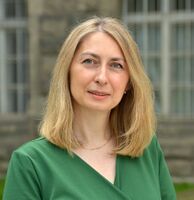 Magdalena Rembeza, Team Member: Magdalena Rembeza is a tenured Assistant Professor at Gdańsk University of Technology, Poland, where she completed her doctorate. She is also a member of the Board of the Revitalization Forum Association. In years 2009-2014, she was the head of GUT’s postgraduate studies on urban revitalization. She gained her professional experience in Poland, England, Germany and the United States. She is also a scholarship holder of the Kosciuszko Foundation in 2014. In years 2014-15, she has completed the SPURS Program at the Massachusetts Institute of Technology (MIT), USA. Her research interests and practice focus on widely understood revitalization of contemporary cities and its public space, also with the use of art and culture. Motivation for LOLA project: The LoLa project provides a valuable opportunity to expand knowledge in the field of landscape architecture by exposing to diverse perspectives, case studies, and interdisciplinary approaches. I believe that the LOLA project will help me develop both my theoretical knowledge and practical skills, while also inspiring a more critical and creative approach to landscape architecture. This experience would be an important step in my academic and professional development, enabling me to contribute more effectively to the design of meaningful and resilient environments.
-
 Miłosz Marciniak, Team Member:Miłosz Marciniak holds PhD in engineering and technical sciences, specialising in landscape-related issues within spatial management and planning, and a MSc in Physical Geography and Landscape Shaping, with a specialisation in geomorphology. These two pillars of his education underpin his research and practical interests, in which landscape plays a central role—as a natural, spatial, and social system. Focus on landscape ecology and on applying landscape research to spatial planning. In his work, he applies physical geography methods in the context of new land-use development and the preservation of ecological connectivity, with particular emphasis on climatology (including contemporary climate change), hydrology, and soil and ground science. Motivation for LOLA: The Gdańsk Bay area is an exceptionally diverse and ecologically rich landscape system—ranging from sandy dunes and cliffs to river deltas—one that deserves greater recognition and understanding. At the same time, these coastal ecosystems are under strong anthropogenic pressure: some have become embedded in the landscapes of port cities and their surroundings, while others are disappearing irreversibly. These changes occur both subtly and abruptly. I see participation in LOLA – Local Landscape System Labs as an inspiring and important opportunity to capture and communicate these processes and their significance, and to reflect on how they shape the identity of the Gdańsk Bay region, to which I feel particularly connected.
-
 Katarzyna Zielonko-Jung, Team Member: Katarzyna Zielonko-Jung, is an architect, academic lecturer, scientist, professor at Gdańsk University of Technology at the Department of Environmental Design. She has cocreated the program for postgraduate studies in Ecological Architecture and Construction and is a lecturer there. She has authored numerous Polish and foreign publications related to ecological architecture issues, in particular their relationship with microclimatic phenomena in the urban environment. She participated in research projects focused on sustainable architecture and improving the quality of city climate. She is a member of Gdańsk Architecture Council, UN Global Poland Climate Council, Mazovian District Chamber of Architects, and Association of Polish Architects. Motivation for LOLA project: Katarzyna is motivated to be part of the LOLA because it is a great opportunity to combine her experience and competencies with the knowledge of specialists from other disciplines. This will allow her to better understand the phenomenon of landscape and participate in discussions about its economic value.
-
 Ilmian Sujamiko, Team Member: Ilmian Sujamiko is a PhD student in the Department of Spatial Planning at the Faculty of Architecture, Gdańsk University of Technology. Trained as both an architect and urban planner, his research focuses on stakeholder dynamics within the port-city ecosystem, with particular attention to the socio-spatial dimensions of the port-city interface, as well as processes of port-city evolution and transition. He has collaborated with several international research groups and organisations working on sustainable urban development. Motivation for LOLA project: Building on my previous participation in the TELOS project, I am highly motivated to continue my engagement through the LoLa project and to deepen my understanding of local landscape systems as complex and dynamic ecosystems. My main research focuses on the port–city interface, and I see strong connections between this perspective and the aims of LoLa. I believe that participation in the project would not only enrich my academic development and broaden my interdisciplinary perspective, but also allow me to contribute meaningfully through my background and my research on complex territorial and stakeholder dynamics.


Turkey: Akdeniz University
- university website, Project partner
-
 Veli Ortacesme, Team Coordinator: Veli Ortacesme has been trained as a landscape architect. His specialty and research interests include landscape planning, protected areas and urban green spaces. After having worked in private sector for two years, he moved to academia where he has been studying for more than 30 years. Currently, he has been teaching and conducting research at Akdeniz University, Faculty of Architecture, Department of Landscape Architecture in Antalya, Turkey. Veli has 35 years of experience in professional practice, education and research and published more than 200 articles, conference papers, research reports, book chapters and books. Motivation for TELOS project : The economic aspect of landscape receives little consideration in research as well as in the programs and actions. The TELOS Project deals with this issue in urban environments. What makes Veli more excited is the fact that the project aims to empower new generation of visionary professionals and decision-makers to address sustainability challenges.
-
 Meryem Atik, Team Member: Meryem Atik is a full-time lecturer and researcher at the Department of Landscape Architecture, Faculty of Architecture, University of Akdeniz, Antalya Turkey. Her works focuses on the natural and cultural aspects of the landscape on special topics of cultural landscapes, landscape character analysis, rural landscapes, as well as landscape conservation, native plants, tourism and environment relations, planting design. She is the co-author of 10 English book chapters and recently the editor of Akdeniz University Journal of the Faculty of Architecture. Motivation for TELOS project : Human effort to benefit from nature is motivated by an economic purpose and resulted multiple relationship between culture and landscape. What motivates Meryem to be part of the TELOS project is to understand the intact relation between economy and landscape and to learn how such relation can be transferred in “sustainable” models.
-
 Elif Palak Bektas, Team assistant: Elif graduated from the Department of Urban Design and Landscape Architecture in 2017. After her master degree with a focus on landscape planning, she continues her education as a PhD student at Akdeniz University, Department of Landscape Architecture. Currently, she has been working as a Research Assistant since 2019. Her research interests include ecological landscape planning, urban blue and green infrastructure and urban design. Motivation for the TELOS project: The TELOS Project has been a very detailed and clear demonstration of the complex relationships in the landscape with different disciplines. What makes Elif more excited is the potential of this multi-layered structure that connects many disciplines, strengthening the inter-sectoral dialogue and broadening the perspective of each field of expertise.
-
 Ibrahim Yilmaz, Team Member: Ibrahim Yilmaz is specialized in agricultural economics. His specialty and research interests include farm management and farm economics, agricultural cooperatives, rural development and agricultural marketing. After graduations he started to academia where he has been studying for more than 35 years. Currently, he has been teaching and conducting research at Akdeniz University, Faculty of Agriculture, Department of Agricultural Economics in Antalya, Turkey. Ibrahim has 37 years of experience in professional practice, education and research and published more than 150 articles, conference papers, research reports and book chapters. Motivation for TELOS project : As agricultural economists, Ibrahim works towards solving the problems encountered in agriculture by combining agricultural and economic sciences. With a similar approach, the TELOS Project is also concerned with the economic aspect of landscape in urban environments. What motivates Ibrahim is that the project allows him to apply his experience in a new field and aims to empower the next generation of decision makers to address sustainability challenges.
-
 Emrah Yildirim, supporting faculty: Emrah is a landscape architect. He started to work as a Research Assistant at Akdeniz University, Faculty of Architecture Department of Landscape Architecture in 2000. He is still working as a Doctoral Lecturer in the same department. His specialty and research interests include landscape planning, landscape ecology and Geographic Information Systems in landscape architecture. Motivation for the TELOS project: The impact of landscape economy on the structure of the landscape is worth investigating. In addition, considering economic activities and the system cycle together in landscape planning will bring new solutions.


Italy: La Sapienza University Rome
- university website, Project partner
-
 Maria Beatrice Andreucci, Team Coordinator: Architect, landscape architect and economist. She holds a Ph.D. Doctor Europaeus in Environmental Design and works as Research Professor at the Department of Planning, Design, Technology of Architecture, “Sapienza” University of Rome. She has published more than 100 scientific products, including 5 books, and has delivered more than 80 oral presentations and keynotes in international conferences and workshops. She is leading several Eu funded projects, and her work continues to engage environmental technological design, landscape ecology, and economic valuation as an evolving integrated framework, linking nature-based solutions’ performance assessment, economic valuation of ecosystem services, climate mitigation, and urban resilience capacity building. Motivation for TELOS project: Through active participation in TELOS, Maria expects to contribute – leveraging her background and experiences in the field of the Landscape Economy – to the dissemination, at an international level, of the relevance of the multiple social and economic benefits provided by nature-based solutions towards climate neutral, resilient, healthy, inclusive, and equitable neighborhoods and cities.
-
 Marco Delli Paoli, Team Member: Architect, PhD in Environmental Technology Design. He is currently a postdoctoral researcher at Sapienza University of Rome (Italy), where he is carrying out research activities on Positive Energy Districts (PEDs) and climate-adaptive design strategies, combining them through a holistic approach to cope with the energy transition scenario. Expert in the field of Technology of Architecture from 2023 and member of the Italian Society of Technology of Architecture (SITdA). He is an active member of Working Group 4 of the COST Action “Positive Energy Districts European Network”, for which he holds the role of Grant Holder Manager. Additionally, he is involved in many international research groups, collaborating with researchers and professionals, including IEA Annex83, with the objective of elucidating the interrelated challenges associated with the PED model in urban areas.


Spain: Technical University of Valencia (UVP)
- website, Project partner
LoLa Core Group with regular activities of the HORTALAB-LOLA, academic courses + other activities:
-
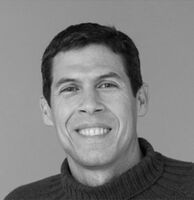 Juan Jose Galan Vivas, local LoLa project coordinator: Juanjo Galan-Vivas is an Associate Professor in the Urban Planning Department of the Polytechnic University of Valencia (Spain). His teaching and research focus on landscape planning, landscape design, sustainable development, regional and urban planning, and, on a more general level, on the intersections between social and ecological systems. He coordinated the Sierra Calderona Strategic Plan (2013-2014) and the AELCLIC project for the Adaptation of European Landscapes to Climate Change (2018-2020). From 2017 to 2020 he was the promoter and chair of the Landscape Observatory of Finland and between 2021 and 2024 he participated in the TELOS project. Motivation for the Lola project: A system-based approach can provide a new lens to understand and plan the configuration and evolution of the landscape. The LOLA project gives an opportunity to envision and codesign new systemic and transitional paths for more sustainable, inclusive, resilient, and democratic landscapes in a close collaboration between the academia and local communities.
-
 Guillermo Palau Salvador, core group Hortalab: As a Full Professor at the Universitat Politècnica de València (UPV) and Senior Researcher at Ingenio CISC-UPV, Guillermo brings over two decades of experience at the intersection of academia, systemic innovation, and socio-environmental governance. His core research is in Agricultural Water Management and Food Governance. Beyond his academic pursuits, he is an expert facilitator and certified trainer in applied creativity utilizing specific methodologies dedicated to helping public and private organizations navigate complex socio-technological transitions. His professional focus is deeply rooted in his commitment to community and heritage, reflected in his contributions to the "Artxiviu de l’horta" documentary project and his active role as secretary of the Assut Foundation, preserving the natural and cultural landscape of the Valencia Region. Motivation for Lola: ...rooted in his core interests in transformative education and sustainability transitions which rely heavily on the kind of transdisciplinary learning that LOLA champions. The project's emphasis on connecting students with real-world community initiatives perfectly complements his practical expertise in systemic innovation and the use of applied creativity methodologies to navigate complex socio-technological changes.
-
 Oksana Udovyk: Oksana Udovyk is a Marie Skłodowska-Curie Postdoctoral Fellow and collective intelligence designer advancing the science and practice of transformative resilience and recovery. She holds a PhD in Environmental Governance (Södertörn and Linköping Universities, Sweden), an MSc in Sustainable Development (Linköping University), and a BSc in Natural Sciences (Kyiv-Mohyla Academy, Ukraine). At INGENIO (CSIC-UPV), she leads transnational research on urban transformation, climate risk, and recovery, connecting post-DANA reconstruction in Spain with post-war recovery in Ukraine. Motivation for LoLa: ...a space to actively challenge dominant paradigms of recovery and planning that remain rooted in growth-oriented, technocratic and fragmented logics. Her motivation is to use this project to test transformative recovery as an epistemic shift—towards regenerative, relational, and post-growth approaches to landscapes and territories. Working within contexts of polycrisis, she aims to bring systems thinking, participatory foresight, and futures practices into lived experimentation, where knowledge is co-produced with communities and grounded in place. LOLA offers the possibility to move beyond incremental adaptation and instead explore how landscapes can become sites of systemic transformation, care, and long-term resilience.
-
 Natalia García-Fernández: Natalia is an architect and landscape architect. She is a part-time professor at the Universitat Politècnica de València. Her teaching and research focus on governance and right to the city, gender and diversity perspective and basic habitability. She takes part at SOSTRE (www.sostre.org), a group of architects working on social cooperation in territorial projects at different scales basing the construction of the city on the participation of all the stakeholders involved. Motivation for LoLa: The LOLA project offers an opportunity to explore new teaching and participatory methodologies and reinforced aspects like inclusive cities and resilient territories. A way to a sustainable real transformation growing interest in everyday life applying systemic thinking.
-
 Ramiro Salvador Erazo : Ramiro Salvador Erazo is an ecuadorian architect and urban planner currently pursuing a Master’s in Landscape and Urbanism at the Universitat Politècnica de València. He brings over a decade of professional experience that bridges the strategic planning of social housing projects for local and national administrations, as well as collaborative fieldwork, with technical design and construction supervision of local public spaces at different scales at the municipal level. He has led significant public and private initiatives, serving as Director of Planning at “Creamos Infraestructura EP” (2022) and as a specialist advisor for the Ecuadorian Ministry of Urban Development and Housing (2024). Motivation for LoLa: Ramiro sees the LOLA project as an opportunity to learn and reflect on urban and landscape planning from a complex and systemic approach, integrating and reviewing his work experiences in light of the urgent environmental challenges we face in all regions, which particularly affect peripheral and intermediate territories and their communities.


LoLa Support Group with academic courses, landscape forum, student competition + other activities:
-
 María José Viñals: Dr. María José Viñals is Full Professor and senior researcher at the Universitat Politècnica de València, Spain. She was the Director of the UPV International Office. Her field of expertise focuses on the tourism management of natural and cultural Heritage, Public Use and Conservation of Natural Protected Areas and Heritage Sites, and Heritage Interpretation. She has conducted research in different countries and is an expert consultant for various international organisations, including the Spanish Ministry of the Environment.Motivation for LoLa: One of her areas of interest is landscape as a space shaped by nature and humankind. Throughout her career, she has explored these kinds of territories in various research projects, dissertations and master’s theses. She is interested in the LOLA project as a way to further her understanding of these spaces, particularly from a participatory perspective.
-
 Francisco Galiana Galán : Francisco Galiana Galán is an Associate Professor in the Agrifood and Rural Engineering of the School of Agricultural Engineering and Environment at Universitat Politècnica de València (Spain). His teaching is in landscape planning and environmental resource management. His research focuses on indicators of sustainable forest management, landscape characterization, landscape services and green infrastructure. He is a research member at the Aquaculture and Environment Research Centre (ACUMA) and participated in European Projects, such as the EIT Climate-KIC AELCLIC-Pathfinder Project Adaptation of European Landscapes to Climate Change (2018-2020) and H2020 Grow Green about Cities for Climate and Water Resilience, Sustainable Economic Growth, Healthy Citizens and Environments (2017-2022). Motivation for LoLa: Lola aims to reconsider the criteria for physical planning and sustainable development in an area affected by a clear risk of flooding. To this end, it proposes a new approach to landscape planning based on a systemic framework, which requires transforming modes of collaboration, promoting co-design, and adopting a sustainable vision in territorial planning proposals.
-
 María Vallés Planells : María Vallés Planells is PhD in Agricultural Engineering in UPV (2009) and Master in Natural Resource Management in Cranfield University (2001). She is associate professor in the Department of Rural and Agrifood Engineering in Universitat Politècnica de Valencia (UPV). Since 2003, her teaching is related to landscape planning disciplines, visual landscape analysis and the management of Geographical Information Systems in landscape studies. Her research is mainly focused in landscape assessment through public participatory techniques, landscape evolution and resilience, urban green infrastructure and landscape cultural services.Motivation for LoLa: Maria’s motivation for participating in LOLA project lies in applying systemic thinking and a participatory approach to landscape characterization and to green infrastructure design within the framework of landscape planning tools.
-
 Ignacio Díez : Ignacio Díez is an Agricultural Engineer, holds a degree in Environmental Sciences, and has a Master’s degree in Landscape Architecture. He earned his PhD from the Universitat Politècnica de València in 2015. He founded the Valencian landscape architecture studio cercle (www.cercle.es). He is Associate Professor in the Department of Urban Planning at the Universitat Politècnica de València and promotes the outreach platform paisatge.org. His work focuses on landscape planning and design, with particular attention to public participation processes. In 2025, he received the award for Best Green Infrastructure Project in Spain for the landscape intervention in the Cabanyal neighbourhood (Valencia), granted by the Spanish Association of Public Parks and Garden. Motivation for LoLa: Ignacio’s motivation for participating in LOLA project lies in applying systemic thinking and a participatory approach to landscape characterization and to green infrastructure design within the framework of landscape planning tools.
-
 Elisabet Quintana Seguí: Elisabet Quintana Seguí holds a PhD in Architecture from the Universitat Politècnica de València, where she is Assistant Professor of Urban Planning and Landscape. She also holds a Diploma in Landscape Architecture and is a member of the Spanish Association of Landscape Architects. With over twenty years of professional experience, she is specialised in public space and landscape design. She is co-author of the Landscape Programme of Gandia, linked to the Coastal Territorial Action Plan of the Valencian Community, and of the Master Plan for the Beniopa Ravine. She has developed public and private projects independently and within multidisciplinary teams. Motivation for LoLa: Elisabet´s motivation to participate in HORTALAB‑LOLA is to deepen my understanding of systems thinking and apply it, from a landscape architecture perspective, to the analysis and regeneration of vulnerable territories, linking teaching, applied research, and project-based work with local landscapes and communities.
-
 Julia Deltoro Soto: : Julia Deltoro Soto is an Associate Professor in the Department of Urban Planning at the Universitat Politècnica de València (Spain). She is Deputy Director for Academic Organisation and Business Chairs at the School of Architecture (UPV) and Associate Editor of the international research journal VLC Arquitectura. She holds a degree in Architecture from the ETSA and a PhD in Urban Design and Planning from the UPV. Her research focuses on urban design and planning, urban history and morphology, sustainability, and economic and industrial areas. She has teaching and professional experience in public and private sectors at national and international levels. Motivation for LoLa: Julia’s motivation to participate in the LOLA project lies in her interest in collaborating with other European universities to exchange research approaches, participatory practices, and teaching methodologies related to systems thinking, territorial and landscape regeneration and transformation. Through this collaboration, she aims to support students in developing a deeper and more integrated understanding of how contemporary challenges are interrelated, and of how systems thinking can contribute to addressing them effectively.
-
 Ana Gascón‑Hernández: Ana Gascón‑Hernández is an Assistant Professor (tenure‑track) in the Urban Planning Department of the Polytechnic University of Valencia (Spain). She served as Secretary of the Sustainable Municipalities Chair from 2013 to 2016, she was a member of the Divalterra‑UPV Chair from 2016 to 2018, and she was a researcher in the European project “Promoting capacity building and knowledge for the extension of urban gardens in European cities” in 2025. Her main research line focuses on the study of Areas of Economic Activity, considering their renewal and specific characteristics as assets in the development of the territory and consolidated urban areas. Motivation for LoLa: The LOLA project offers an opportunity to enhance urban planning education through a robust framework that enables students to understand and address the complex, interrelated challenges of sustainable development and climate change, whilst integrating systems thinking into their projects. The project also provides a space to reflect on, propose and question measures relating to the regeneration of areas such as Horta Sud from a regenerative and relational perspective, with the aim of achieving a truly transformative regeneration.
-
 Adrián Torres Astaburuaga: Adrián Torres Astaburuaga is a tenure-track Assistant Professor and researcher in the Department of Urban Planning at the Universitat Politècnica de València, Spain. Throughout his twenty-year professional career, he has developed projects in architecture, urban planning and landscape architecture, exploring the concept of bio-urbanism, and has served as a researcher and lecturer in various research groups at European universities such as those in Lyon, Annecy, Grenoble and Geneva. His research and practice focus on the interaction between water, the urban environment, nature and civil society. Motivation for LoLa: The LOLA project offers a context-specific educational process based on systems thinking, citizen participation and a biophysical understanding of the urban environment. These aspects lie at the heart of Adrian’s professional and research practice, which is why this project is of particular interest to him. The specific case concerning the flooding suffered by the southern agricultural region of Valencia is of great current and research importance, and he believes that addressing participatory regenerative approaches from an academic perspective is a process of the utmost relevance.
-
 Sandra Nunez Malavé: Architect from the Universitat Politècnica de Catalunya (UPC), she holds a Master’s degree in urban planning design (FPC-UPC) and a Master’s degree in land policy and sustainable urban development (UNED-LILP), as well as postgraduate studies in GIS (UPV). She is currently pursuing a law degree at UNIR. As a partner at Colectivo CCRS, she has co-led over fifty urban and territorial planning projects. She has been a part-time lecturer in the landscape degree at UPC and is currently a part-time lecturer at the Universitat Politècnica de València (UPV). Her research focuses on rural settlements through urban planning instruments. Motivation for LoLa: Sandra's motivation to participate in the LOLA project is to incorporate systems thinking into my teaching practice on urbanism. I often observe students’ difficulties in translating territorial information into coherent project proposals. LOLA offers an opportunity to explore teaching methodologies that strengthen systemic landscape understanding through project-based learning in real contexts.


Lebanon: American University of Beirut
- website, Project partner
-
 Beata Dreksler, project coordinator at AUB: Beata Dreksler is a landscape architect and associate professor at the American University of Beirut. She holds a PhD in landscape architecture from Warsaw University of Life Sciences – SGGW, Poland. Beata has over 30 years of professional and academic experience across Europe, Central America, and the Middle East. Her projects have been featured in books and professional magazines and have received awards, including Best Public Space in Poland (2017). Her research explores landscape democracy and digital transformation in landscape planning and design. She is the Middle East and North Africa Trustee of the International Association for Community Development (IACD). Motivation for LoLa: My motivation for engaging in the LoLa project comes from my interest in reading landscape as a living system—shaped by relationships, flows, and constant adaptation. Working in Lebanon has made this especially tangible, where everyday landscapes reveal how ecological processes and human practices intertwine under pressure. I find the living lab approach particularly valuable, as it grounds learning in real conditions—through observation, engagement, and reflection within the landscape itself. For me, LoLa is an opportunity to connect this situated, lived understanding with my teaching and to contribute to a broader exchange on landscape as an evolving system.
-
 Karim Bacha: Karim Bacha is a lecturer in Landscape Architecture at the American University of Beirut and founder of Scapeworks, a landscape architecture and urban design studio with over 15 years of experience across the MENA region. His work spans cultural landscapes, territorial planning, and public realm design, while his academic interests focus on spatial representation, regenerative design, and emerging technology applications in landscape architecture. His teaching connects professional practice with critical and systems-based approaches to landscape. Motivation for LoLa: The LoLa project offers a valuable framework for reading landscape as a dynamic system shaped by ecological, social, and spatial forces. In Lebanon, where environmental degradation, socio-economic instability, and territorial transformation are closely intertwined, this perspective is particularly urgent. LoLa opens a space for connecting local conditions to a wider international dialogue on systems thinking, territorial regeneration, and innovative forms of landscape learning.
-
 Monika Fabian: Monika Fabian is a landscape horticulturist, researcher, and full-time instructor at the Department of Landscape Architecture at the American University of Beirut. She holds master’s degrees from Corvinus University in Hungary and the Mediterranean Agronomic Institute of Chania (CHIAM) in Greece. Her work focuses on urban landscapes in Mediterranean contexts, with a particular interest in green roofs and urban foodscapes as practical ways to improve sustainability and everyday urban life. Alongside her research, she teaches several courses for landscape architecture students, bringing together design thinking, ecological knowledge, and hands-on approaches. Motivation for LoLa: Monika is motivated to join the Local Landscape Systems Lab because it offers a platform for education-focused organizations to engage in transformative co-creation with local communities and build practical local skills together.


The Netherlands: LE:NOTRE Institute
- website, Project partner
-
 Jeroen de Vries, Team Coordinator: Jeroen de Vries, landscape architect, is a researcher at the LE:NOTRE Institute. His research focuses on food governance, the design of foodscapes in metropolitan areas, the productivity of different typologies of UA, and strategies to integrate these in the spatial design of urban and peri-urban areas. Jeroen combines work as a professional practitioner, lecturer, and researcher. He coordinated the theme of foodscapes in the LE:NOTRE Landscape Forums in Rome, Zagreb, Bratislava, and Rimini. Jeroen is active in a number of European educational and research projects that foster the quality in landscape education, research and practice. His mission is to support the academic community and the profession of landscape architecture on a European level. Motivation for TELOS project: The TELOS project offers a unique possibility to contribute to an often neglected aspect of landscape planning. Jeroen is motivated to include various dimensions of economy to develop landscapes with the lens of a common good - the landscape belongs to all.
-
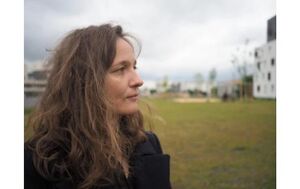 Roxana Triboi, Team Member: Roxana Maria Triboi is an architect and urban planner (PhD), researcher and educator working at the intersection of research, public policy and community practice. Her work explores food as a commons, connecting the right to food with collective stewardship of land and the social infrastructures that sustain everyday life. She focuses on how agroecological urbanism and participatory governance can strengthen communities' capacity to shape their food systems. She combines policy work as an external expert for the Urban Agenda for the EU Food Partnership with practical experimentation through ROOTED, the Horizon Europe project that investigates landed community kitchens as infrastructures of care, solidarity and access to food, connecting urban communities with agroecological producers. At LE:NOTRE Institute, she co-coordinated Erasmus+ AESOP4Food and continues to contribute to its international teaching network. A steering committee member of the AESOP Sustainable Food Planning Group, she brings research on urban pastoralism and food commons into education, helping students connect questions of land, power and collective responsibility with concrete planning choices.

